For when it isn't just "what's wrong" — it's "what's the point"
Some pain isn't a malfunction to fix. It's a signal that something in how you're living no longer holds together — a question about meaning, freedom, mortality, or who you're becoming. Existential therapy and logotherapy, the meaning-centred method developed by Viktor Frankl, work with that question directly instead of past it.
Book a session → How sessions workOnline worldwide · In person in Prague 3 · 50-minute sessions · English, Russian, Czech
Trained at the source
"He who has a why to live for can bear with almost any how."
— Viktor Frankl
- Existential Therapy & Logotherapy — Viktor Frankl Institut, Vienna
- MSc Psychology · 20+ years of clinical practice
- Sessions online and in person in Prague
- Works alongside symptom-focused therapy when needed
What brings people to existential work
Nothing's wrong, exactly. But nothing feels like it matters
Work, relationships, achievements — all present, all somehow beside the point. You're functioning, but going through the motions.
Time suddenly has an edge to it
A diagnosis, a death nearby, a birthday that landed differently than expected. You can't stop noticing that time is finite.
Freedom that feels like a burden
No one is telling you what to do anymore — and it turns out that's its own kind of frightening. Every choice is yours alone.
Loss with a philosophical undertow
Grief that isn't just sadness — it's also made you question what any of it was for, and what's supposed to come next.
A life you didn't quite choose
Rebuilt in a new place, a new role, a new stage of life. Who you were doesn't fit anymore, and who you're becoming isn't clear yet.
Not depression exactly. Not anxiety exactly
Just a persistent sense that something needs to change at a level deeper than habits or thought patterns.
Not sure if any of this applies to you? There's a short, free reflective tool for that.
Take the Meaning in Life Test →Existential therapy & logotherapy, plainly
Existential therapy
Existential therapy works with the core facts of being human directly — meaning, freedom, isolation, and mortality — rather than treating distress about them as a problem to be eliminated. Existentialist thought holds that people are fundamentally free to shape their lives and responsible for their choices, and that this kind of distress is a natural part of being human, not a malfunction.
The aim isn't to make difficult questions disappear. It's to help you live with them more directly, so you can act with more clarity and less avoidance.
Logotherapy
Logotherapy is Viktor Frankl's specific method within this tradition — "healing through meaning." Frankl, a psychiatrist who survived the concentration camps, concluded that the drive to find meaning, not pleasure or power alone, is what sustains people through even the hardest circumstances.
In session, this looks like Socratic dialogue rather than advice: I ask the questions that help you uncover meaning you already hold, rather than prescribing one to you. Where it fits, I also draw on specific logotherapy techniques such as dereflection and paradoxical intention.
What to expect
Trained at the source
Existential Therapy & Logotherapy training completed at the Viktor Frankl Institut in Vienna, not a weekend certificate.
Your answers, not mine
Socratic dialogue rather than advice-giving. My role is to help you uncover what already matters to you, not to tell you what should.
Online or in Prague
Sessions online worldwide, or in person at my office in Prague 3 — whichever works for where you are.
Not about religion or ideology
Logotherapy works with clients of any belief system or none. It's a clinical method concerned with meaning, not doctrine.
Combined when it helps
Where anxiety or depression are also present, existential work often runs alongside more structured, symptom-focused approaches.
20+ years of practice
Across languages and cultures — including the specific weight of building a life somewhere new.
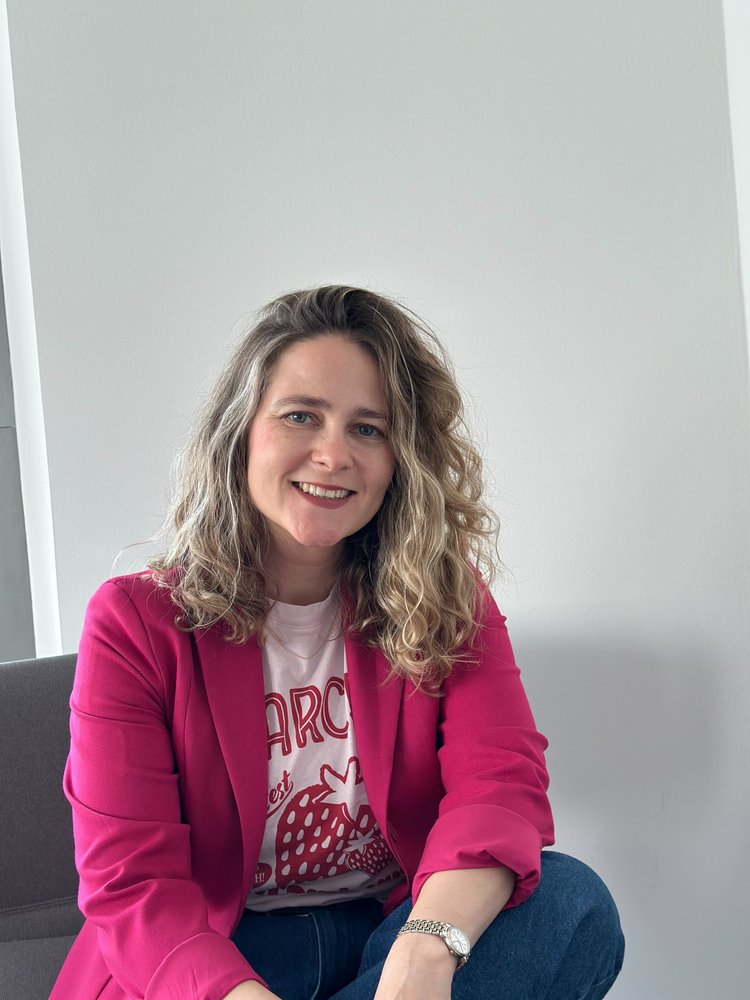
Katia Tandon
- MSc Psychology + MBA
- Existential Therapy & Logotherapy — Viktor Frankl Institut, Vienna
- ICF Certified Coach
- 20+ years clinical & coaching practice
- Works in English, Russian and Czech
- Based in Prague, EU (GDPR compliant)
I've spent over 20 years as a therapist, and existential work is where the deepest sessions happen. It's rarely the first thing someone books in for — more often it surfaces once we're a few sessions into something else, and it turns out the real question underneath was always about meaning.
My training in Existential Therapy and Logotherapy came from the Viktor Frankl Institut in Vienna. I take it seriously as a discipline, not a philosophy I dabble in — and I combine it, when it's useful, with more structured approaches for the practical, day-to-day symptoms that often travel alongside these bigger questions.
What that means for you: you don't need to arrive with the question already articulated. Most people don't. We find the shape of it together.
I was sceptical at first, and sometimes even doubting the process — but at the very end it all made sense and helped me realise what my next steps in life should be.
— Jasmína Orlická, Creative Lead, DentsuShe was a good listener and was able to summarise everything I said in half an hour with a simple sentence — a person needs to come up with the solution on their own.
— Ilja Petrov, Principal Engineering Manager, MicrosoftExistential therapy & logotherapy — FAQ
Start with a first session
Fill in the form and I'll get back to you within 24 hours to arrange a first session. There's no obligation and no intake form to complete in advance.
You don't need to arrive with the question fully formed — that's often part of the first few sessions.
Or email me directly if you prefer